
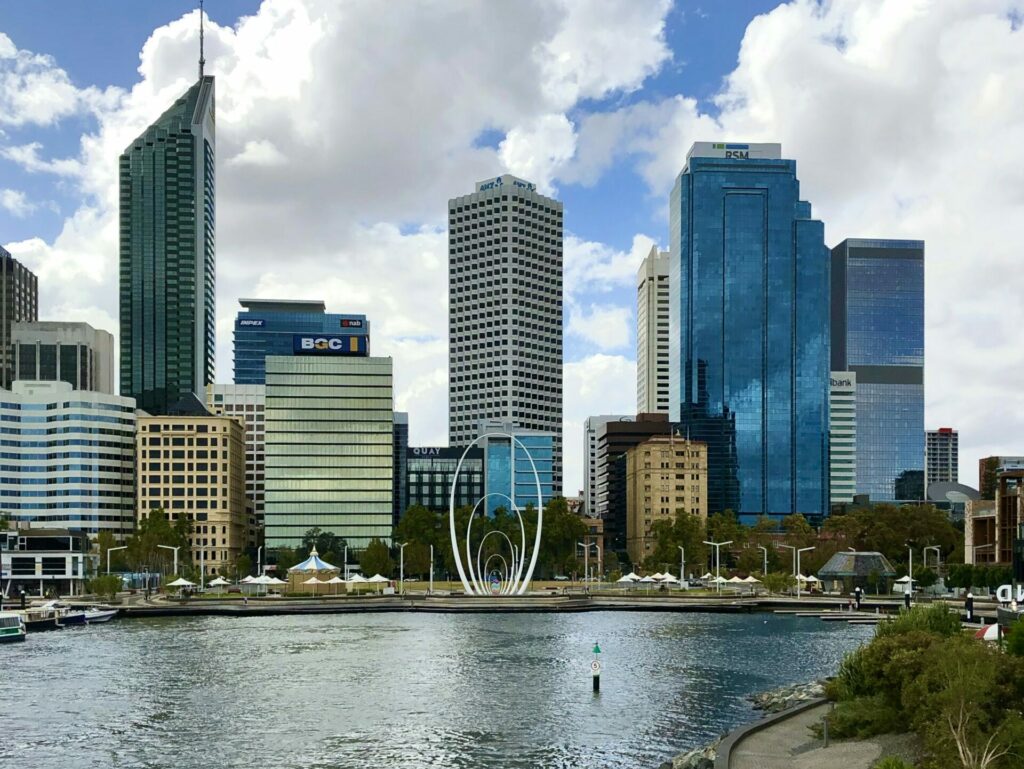
Global Asbestos Audits’ Perth team services commercial property owners, landlords, property managers, and developers throughout Greater Perth and across Western Australia. Whether your premises are in the CBD, the inner suburbs, Perth’s beachside suburbs such as the historic Freemantle, the South East region or other regional areas of South Australia, our network of qualified consultants, inspectors, and assessors is ready to help you identify, manage, and document asbestos risk at your property.
About Global Asbestos Audits Perth
Perth, founded in 1829, is one of Australia’s most commercially diverse cities, with a long history in mining, industry, and manufacturing. That history also means Perth has a significant proportion of older commercial buildings, many of them constructed during the decades when asbestos was widely used in the construction and manufacturing industries. Global Asbestos Audits works with Perth-based property owners and managers to assess, document, and manage asbestos risk in accordance with the legislative requirements that apply in Western Australia.
Initial enquiries are always welcome by phone or email. We are happy to discuss your situation and provide guidance before any site visit is required. Because every property is unique, however, our consultants typically conduct an on-site consultation to properly scope your premises, gain a thorough understanding of the building’s history, and tailor their recommendations accordingly.
Australia’s nationwide ban on the importation, manufacture, and use of asbestos was phased in from the 1980s and took full effect on 31 December 2003. Prior to that date, asbestos was used extensively across the construction and manufacturing industries in products including plasterboard, fibro cement sheeting, insulation, roofing and guttering materials, floor tiles, pipe lagging, electrical boards, and fire-retardant linings. Given Perth’s large number of commercial buildings constructed before 2003, and the city’s deep ties to mining, manufacturing, and industry throughout the twentieth century, asbestos-containing materials (ACMs) remain a significant legacy concern across a large proportion of Western Australia’s existing commercial building stock.
Our Perth team regularly attends sites prior to demolition or major renovation to assess asbestos risk and confirm the presence or absence of ACMs. From there, we coordinate testing, remediation, and removal, and once ACMs have been cleared, we issue the necessary clearance certificates. Throughout the entire process, everything is thoroughly documented through our asbestos reports and asbestos registers in accordance with Western Australian legal requirements.
We are also seeing an increasing incidence of asbestos contamination arising from contaminated fill material and from imported products originating in countries with less stringent asbestos regulations. Global Asbestos Audits can help you identify and quantify your exposure risk. With the health consequences of asbestos exposure now well understood, a ‘wait and see’ approach is no longer viable. Left unmanaged, asbestos poses serious health risks to workers and tenants while creating significant legal liability for property owners and landlords.
Services Provided Through Our Perth Team
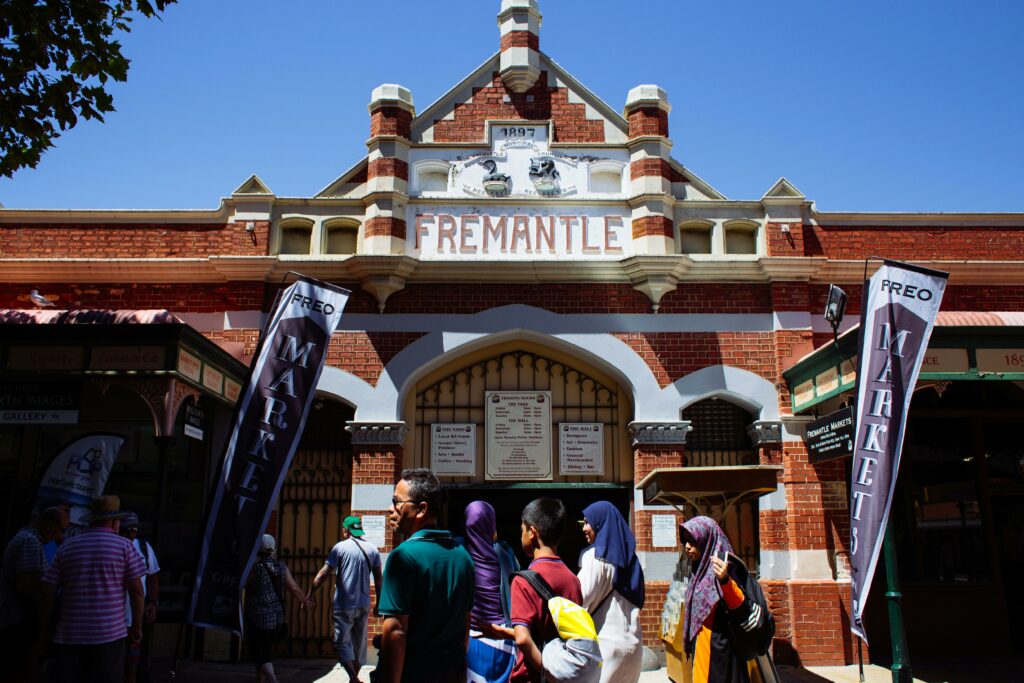
Sydney is one of Australia’s most commercially active cities, and it is also home to a substantial volume of older commercial building stock, much of it constructed during the decades when asbestos was in widespread use. Global Asbestos Audits works with Sydney-based property owners and managers to assess, document, and manage asbestos risk in accordance with the legislative requirements that apply in New South Wales.
Initial enquiries are always welcome by phone or email. We are happy to discuss your situation and provide guidance before any site visit is required. Because every property is unique, however, our consultants typically conduct an on-site consultation to properly scope your premises, gain a thorough understanding of the building’s history, and tailor their recommendations accordingly.
Australia’s nationwide ban on the importation, manufacture, and use of asbestos was phased in from the 1980s and took full effect on 31 December 2003. Prior to that date, asbestos was used extensively across the construction industry in products including plasterboard, fibro cement sheeting, insulation, roofing materials, floor tiles, electrical boards, and fire-retardant linings. Given Sydney’s volume of commercial buildings constructed before 2003, asbestos-containing materials (ACMs) remain a significant legacy concern for a large proportion of the city’s existing building stock.
Our Sydney team regularly attends sites prior to demolition or major renovation to assess asbestos risk and confirm the presence or absence of ACMs. From there, we coordinate testing, remediation, and removal, and once ACMs have been cleared, we issue the necessary clearance certificates. Throughout the entire process, everything is thoroughly documented through our asbestos reports and asbestos registers in accordance with New South Wales legal requirements.
We are also seeing an increasing incidence of asbestos contamination arising from contaminated fill material and from imported products originating in countries where asbestos regulation is less stringent. Global Asbestos Audits can help you identify and quantify your exposure risk. With the health consequences of asbestos exposure now well understood, a ‘wait and see’ approach is no longer viable. Left unmanaged, asbestos risk can expose workers and tenants to serious health hazards while creating significant legal liability for property owners and landlords.
Services Provided Through Our Sydney Team
Global Asbestos Audits provides a comprehensive range of services to help commercial property owners, landlords, and property managers in Perth and across Western Australia meet their legal obligations. Services available through our Perth team include:
- Division 5 asbestos audits (visual inspection)
- Division 6 asbestos audits (more intrusive inspection)
- Asbestos inspections and asbestos testing
- Asbestos reports
- Compilation of asbestos registers
- Asbestos management plans
- Asbestos air testing and clearance certificates
- Pre-demolition asbestos assessments and ACM identification
- Remediation and removal coordination
- Ongoing asbestos management
- Silica air testing, monitoring, and management
Our team draws on years of practical experience and a thorough understanding of the legal requirements in each Australian state and territory to provide recommendations on how best to manage any asbestos exposure identified at your property.
Legislative Considerations for Asbestos Management in Western Australia
Property owners, employers, and businesses operating in Perth and across Western Australia are subject to a comprehensive and recently modernised regulatory framework governing asbestos identification, management, and removal. Compliance with these obligations is a legal requirement and a fundamental duty of care to workers, occupants, and the public.
The Primary Legislative Framework
The Work Health and Safety Act 2020 (WA) (WHS Act), the Work Health and Safety (General) Regulations 2022 (WHS Regulations), and the Work Health and Safety (Mines) Regulations 2022 outline all responsibilities and duties relating to workplace health and safety in Western Australia, including those specifically governing asbestos.
The Code of Practice: How to Manage and Control Asbestos in the Workplace provides practical guidance to persons conducting a business or undertaking (PCBUs) on how to manage risks associated with asbestos, asbestos-containing material (ACM), and asbestos-contaminated dust or debris at the workplace, and thereby minimise the incidence of asbestos-related diseases such as mesothelioma, asbestosis, and lung cancer.
WorkSafe WA, operating within the Department of Energy, Mines, Industry Regulation and Safety (DEMIRS), is the relevant regulator responsible for administering and enforcing these obligations across general industry workplaces in Western Australia.
Asbestos Registers and Management Plans
Under the WHS Regulations, an asbestos register is required for all buildings irrespective of construction date, except for buildings constructed after 31 December 2003 where no asbestos or ACM has been identified and none is likely to be present.
The asbestos register must record the location, type, and condition of all identified asbestos and ACM, dates of identification and any changes to the condition of the materials, and any assumed asbestos-containing materials where testing is not possible. The register must be kept up to date and accessible to all workers and other persons who may need to know the location of asbestos in the workplace.
Where asbestos or ACM has been identified or is assumed to be present, a written Asbestos Management Plan (AMP) must be prepared. The AMP must include the identification of asbestos and ACM, decisions and reasons for decisions about the management of asbestos at the workplace, safe work procedures and control measures, and must be developed in consultation with workers and their representatives.
Licensing Requirements for Removal Work
A Class A licence is required to remove any amount of friable asbestos-containing material at a workplace. A Class A or Class B licence is required for the removal of more than 10 m² of non-friable asbestos-containing material at a workplace.
Following all licensed asbestos removal work, asbestos work areas must be left free of visible asbestos residue. A clearance certificate must be issued by an independent competent person prior to re-occupation of the removal area, and WorkSafe must be notified of all licensed asbestos removal work at least five days prior to commencement.
WorkSafe maintains a publicly accessible licence and registration search, allowing duty holders to verify the validity of any licensed removalist or Licensed Asbestos Assessor (LAA) before engaging them, a step strongly recommended prior to commissioning any removal work.
Air Monitoring
Under Part 8.8 of the WHS Regulations, air monitoring is required by an independent competent person for Class A (friable asbestos) removal work. There is no equivalent prescription for Class B (non-friable asbestos) removals.
Health Surveillance
Where there is a risk to health from asbestos exposure, health surveillance must be provided via a registered medical practitioner. Records must be kept, and WorkSafe must be notified if a person has been exposed to asbestos at a workplace.
Environmental and Disposal Obligations
The Department of Water and Environmental Regulation (DWER) is the regulatory body responsible for investigating and prosecuting illegal asbestos dumping under the Environmental Protection Act 1986 (WA). To ensure safe disposal, asbestos must be taken to a licensed waste disposal site approved by the department.
Under the Environmental Protection (Controlled Waste) Regulations 2004 (WA), a person who disposes of material containing asbestos other than at an approved disposal site commits an offence.
Illegal dumping under the Environmental Protection Act 1986 carries a maximum penalty of $125,000 for corporations and $62,500 for individuals upon conviction.
Penalties for Non-Compliance
The WHS Act provides for categories of offences for breach of health and safety duties, with maximum penalties varying depending on the category of the offence and whether the offender is an individual, an officer, or a body corporate.
Under the WHS Act, a conviction for industrial manslaughter can carry up to 20 years’ imprisonment, as well as a fine of up to $10 million for a body corporate and up to $5 million for an individual — a significant increase from the $2.7 million maximum under the repealed Occupational Safety and Health Act 1984.
The WHS Act prohibits entering into insurance or indemnity arrangements that cover WHS fines and penalties, and voids any insurance policy that purports to indemnify a person for the payment of such fines. Consequently, companies can no longer indemnify directors or officers by paying penalties on their behalf.
WorkSafe inspectors are empowered to issue improvement notices, prohibition notices, and infringement notices, and to refer serious breaches for criminal prosecution by the Director of Public Prosecutions.
Given the scale and complexity of Western Australia’s asbestos regulatory framework and the substantially increased penalties introduced under the WHS Act 2020, engaging a qualified asbestos consultant is essential for ensuring compliance. Global Asbestos Audits provides comprehensive asbestos auditing, register preparation, and management plan services across Perth and Western Australia, supporting property owners and businesses in meeting their legal obligations.
What Is the First Step If You Suspect Your Property Contains Asbestos?
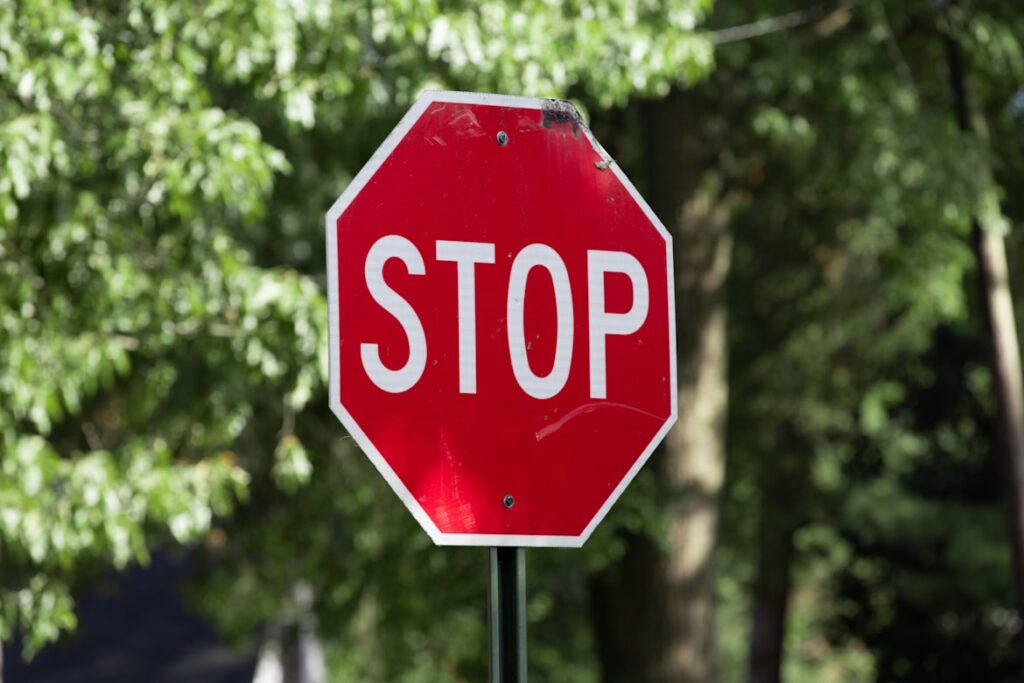
Stop! Don’t disturb it!
If you suspect asbestos-containing materials may be present at your property, the single most important thing you can do is leave those materials undisturbed. Drilling, cutting, sanding, or otherwise damaging ACMs can release asbestos fibres into the air, creating an immediate and serious health hazard for anyone in the vicinity.
Once you have made the area safe, give us a call or email us with a brief description of your situation, and we can work out the rest from there. Sending through some photos is also very helpful and allows us to provide a more accurate initial assessment before attending the site.
📞 Phone: 1800 635 977
✉ Email: [email protected]
We Have Locations, Consultants, Assessors, and Contractors Right Across Australia
While our national coordination is managed from Brisbane, Global Asbestos Audits operates throughout Australia. Our network of qualified consultants, inspectors, assessors, and contractors is active in capital cities, including Perth, Sydney, Brisbane, Melbourne, and Adelaide, as well as in older manufacturing precincts and regional areas right across the country.
No matter where your property is located, we can connect you with the right expertise. Our national reach means you receive consistent, high-quality service and advice aligned with the specific legislative requirements of your state or territory.
Contact our Perth team today to discuss your requirements, and we will make sure the right people are on the case.