
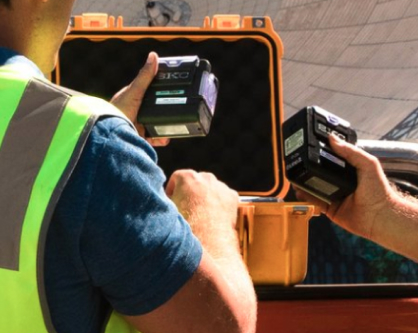
Asbestos air sampling, also called asbestos air monitoring, is a technical process that measures airborne fibre concentrations and compares them against a recognised exposure standard. Unlike bulk sampling, which identifies whether a material contains asbestos, air sampling addresses a different question: whether asbestos fibres are, or have been, present in the air at a level that poses a risk to health. Understanding when air sampling is required, rather than merely available, is an important part of managing asbestos risk in a commercial or industrial setting.
This article outlines the scenarios in which asbestos air sampling is most commonly required or advisable under Australian work health and safety practice.
Scenario One: Clearance Following Asbestos Removal Works
The most common and clearly regulated application of air sampling occurs after friable asbestos removal. Before an area can be certified safe for reoccupation after friable asbestos removal, a clearance inspection is required, and this must include air monitoring by an independent, licensed asbestos assessor who was not involved in carrying out the removal. The purpose is to confirm that residual fibre levels are below the relevant clearance indicator before normal access to the area resumes. For non-friable removal works, clearance certificates are generally still required, though air monitoring is not always mandated in the same way; the specific requirement depends on the nature and scale of the works.
Scenario Two: Ongoing Monitoring in Workplaces with ACM in Situ
Where a workplace contains ACM assessed as stable and undisturbed and managed in place rather than removed, periodic air monitoring may form part of the broader management plan, particularly in higher-risk settings such as industrial facilities with ageing insulation or lagging. This monitoring provides an evidentiary basis to confirm that the management approach remains effective and that no unintended fibre release is occurring, rather than relying solely on visual condition assessments.
Scenario Three: Following Unexpected ACM Disturbance
Air sampling is also commonly required after an unplanned event that may have disturbed known or suspected ACM. This includes storm or flood damage to fibro cement roofing or cladding, structural damage from vehicle impact, fire damage, or unauthorised drilling, cutting, or demolition activity carried out without reference to the asbestos register. In these circumstances, air sampling establishes whether an exposure risk has arisen and informs the decision on whether further remediation, decontamination, or evacuation of the affected area is warranted.
Scenario Four: Prior to Reoccupation of a Remediated Area
Beyond the immediate clearance process following removal works, air sampling may also be used more broadly prior to the reoccupation of an area that has undergone significant asbestos remediation, particularly where the works were extensive, where friable material was involved, or where there is a specific reason for heightened caution, such as the presence of a childcare centre, school, or healthcare facility within or adjacent to the site.
Methodology and Interpretation
Air sampling in Australia is generally conducted in accordance with the Membrane Filter Method described in the National Occupational Health and Safety Commission’s Guidance Note on the Membrane Filter Method for Estimating Airborne Asbestos Fibres [NOHSC:3003(2005)], using calibrated air pumps to draw a measured volume of air through a filter over a set sampling period. The filter is then examined under phase contrast microscopy to quantify fibre concentration. Results are assessed against the exposure standard for asbestos, and, in the specific context of clearance following friable removal, against the clearance indicator level applicable to that process. Interpretation of results should be undertaken by a suitably qualified assessor, since a result within an acceptable range does not necessarily eliminate the presence of localised contamination that may not have been captured within the sampling period or location.
Asbestos air sampling occupies a distinct and necessary place within the broader asbestos management framework, separate from the identification role played by bulk sampling and visual assessment. PCBUs and property owners who understand when air sampling is required, and who engage independent, appropriately licensed assessors to carry it out, are better positioned to demonstrate a genuine and defensible approach to managing airborne asbestos risk.
Global Asbestos Audits has the experience, expertise and knowledge to guide you through the requirement for asbestos air monitoring in various scenarios.
We welcome your initial enquiry and questions.