
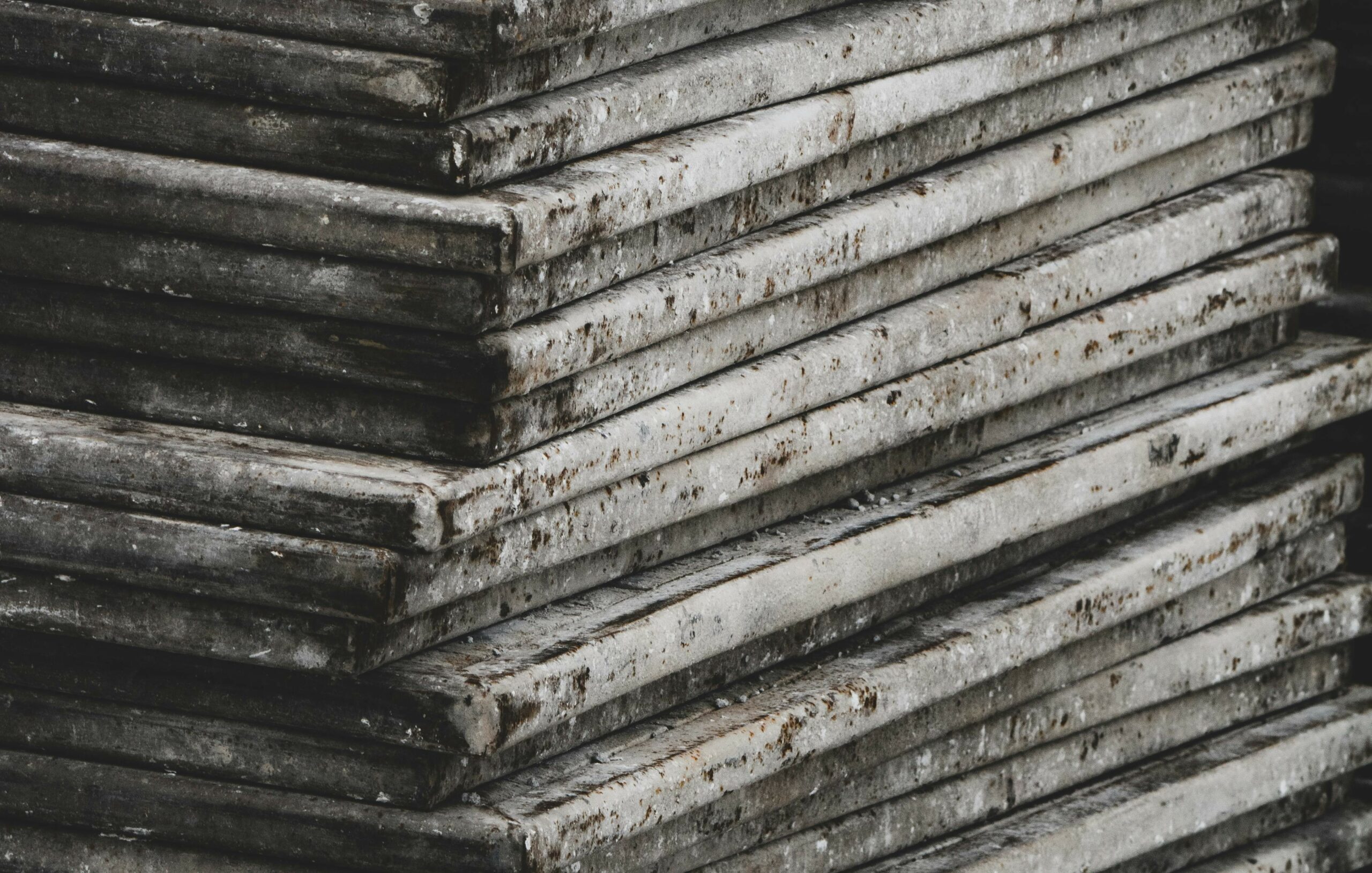
Asbestos first entered the Australian market in the late 1800s through imported products, long before large-scale domestic manufacturing began. By the early 1900s, Australian companies were producing asbestos-containing materials (ACMs), and by around 1917, the manufacture of building-grade asbestos cement (AC) products had begun in earnest. Production expanded dramatically through the mid-20th century and continued until the early 1980s. Although imported asbestos materials remained available throughout this period, home-grown AC products dominated the Australian market.
To support this industry, manufacturers relied on both imported bulk asbestos fibres and locally sourced raw materials. Global Asbestos Audits frequently uncovers legacy ACMs during commercial asbestos inspections, particularly in older office buildings, industrial facilities, and educational settings.
Major Producers of Asbestos Materials in Australia
Over roughly seven decades, several companies became major suppliers of ACMs:
- Asbestos Products Ltd (1934–1944)
Producers of Correbestos, Fibrobestos, Artbestos, Artyle and Armac. - Wunderlich Ltd
Known for Durabestos, Duratile, Durawall, Duralux, Weatherboard, Wunderflex, Villaboard and more. - James Hardie Industries / Hardie-Ferodo / Hardie & Coy
The most recognisable brands – Fibro, Hardiplank, Hardiflex, Versilux, Asbestolux, Hardigrain, Super Six and numerous high-temperature industrial products. - Fibrocene (Queensland Pastoral Supplies)
Makers of AC structural components for modular home kits. - Goliath Portland Cement Co Ltd
Producers of Tasbestos, Flexboard, Trojan tiles and related systems. - CSR (Colonial Sugar Refining Company)
Makers of Fibrock, Vinylflex, Ruberoid and other ACM building and cladding systems. - Asbestolite Pty Ltd (1941–1956)
Suppliers of the Asbestolite AC range.
Three companies- James Hardie, Wunderlich and CSR dominated supply during the post-WWII construction boom. Their products were heavily used not only in residential housing but also in commercial, industrial and government buildings. Today, correctly identifying these materials is critical in commercial asbestos audits, and Global Asbestos Audits specialises in distinguishing between historical ACM brands and modern, asbestos-free alternatives.
More than 3,000 asbestos-based products were manufactured or marketed in Australia, with asbestos cement sheeting being the most widely used. These products were promoted as durable, inexpensive, and easy to install, making them highly popular for commercial buildings, farm structures, schools, community halls, and large industrial complexes.
Traditional AC sheets were made from Portland cement combined with asbestos fibres, which provided reinforcement and tensile strength. By the 1950s, formulations had evolved to include added silica to increase durability. In later years, some James Hardie sheets also incorporated cellulose fibres as alternatives to asbestos, although asbestos remained in many products until the mid-1980s.
Modern fibre-cement boards, now asbestos-free, can look almost identical to historic AC sheets. This similarity often leads to confusion on commercial sites, which is another reason businesses rely on Global Asbestos Audits for accurate asbestos identification before renovations, maintenance, or demolition.
Despite strong competition among manufacturers, many AC products were similar across brands. In some cases, companies shared production facilities, collaborated on supply, or sold nearly identical products under different brand names. An example is the Asbestolite brand in South Australia, jointly owned by Hardie and Wunderlich during wartime transport shortages.
These overlapping product lines make ACMs difficult to identify visually, especially in multi-building commercial complexes or schools where maintenance records are incomplete. Global Asbestos Audits uses accredited testing, detailed ACM registers and robust management plans to resolve this uncertainty.
Industrial Insulation Using Asbestos and the Wittenoom Connection
In 1964, James Hardie, Bradford Insulation Industries and CSR formed a joint venture to produce industrial insulation using chrysotile, amosite and crocidolite asbestos fibres. Much of the crocidolite came from CSR’s infamous Wittenoom mine, which supplied thousands of tonnes of blue asbestos before its closure in 1966. Production of these industrial ACMs continued until 1974.
These materials were widely used in power stations, boiler rooms, factories, chemical plants and mechanical services within large commercial properties, settings where Global Asbestos Audits frequently identify high-risk ACMs during industrial inspections.
CSR purchased Wunderlich’s AC infrastructure in 1969 and continued production under the Wunderlich brand until 1977, when James Hardie acquired the division. Hardie remained the sole Australian manufacturer of AC products until the mid-1980s, when it discontinued the use of asbestos.
Asbestos was not entirely banned in Australia until 31 December 2003, and friction materials such as brake pads remained in use until shortly before the ban.
Other Uses of Asbestos in Australia
Asbestos’s versatility meant it was incorporated into countless products used across commercial and industrial environments, including:
- insulation for pipes, boilers and furnaces
- woven textiles and protective clothing
- sprayed fireproofing
- vinyl and asphalt floor coverings
- roofing felts/membranes, dampcourses and sealants
- paints, mastics/sealers and caulking compounds
- automotive gaskets and brake components
Many of these products remain in older commercial buildings, factories, warehouses, and government facilities. Global Asbestos Audits routinely identify these materials during comprehensive site assessments and ensure that they are accurately recorded in asbestos registers and management plans.
Where ACMs Were Used In Australia
Asbestos-containing materials were extensively used across Australian industry, including:
- construction and building trades
- railway infrastructure
- power stations and substations
- fire protection systems
- Defence facilities
- telecommunications
- plumbing and water infrastructure
- agriculture and heavy machinery
- shipbuilding and marine facilities
- carpentry and sheet-metal fabrication
- industrial lagging and insulation
Because of this widespread use, commercial property owners are still required to maintain up-to-date asbestos registers and management plans years after the ban was implemented.
Global Asbestos Audits offers expert inspections and reporting to ensure full compliance with Australian regulations. Contact Us with your questions or to book an appointment.